Events posted are for the biosafety community and are not automatically approved for CM Points.
Approved trainings can be found here.

Have an event? List it in the Biosafety Calendar.
Events submitted must be approved and may take up to 3 business days to appear on the website.
If you login first you will be able to modify your calendar events if you need to.

ABSA-Sponsored

Events

Views Navigation

Event Views Navigation

Today
  • Large-scale Biosafety

    Webinar

    Large-scale Biosafety will review biosafety for work at large-scale, which the NIH rDNA Guidelines defines as >10L. The course will review Appendix K from GLSP to BSL-3 LS, with a focus on primary and secondary containment. It will review basic bioprocessing steps, such as fermentation/cell culture and purification technologies. Examples of classic and newer single use technologies will be provided. Pearls and pitfalls of the various technologies will be discussed, using various scenarios. The course will include a review of risk assessment techniques used for large scale bioprocesses and a discussion of large-scale related to vaccines, viral vectors, and recombinant proteins.
  • Molecular Biology 101

    Webinar

    Molecular Biology 101 is intended for those professionals that participate in protocol review, facilities planning, and other risk assessment activities but lack a basic understanding of molecular biology and techniques. Following this course, attendees will be able to do more than regurgitate facts and use the new understanding of the principles of molecular biology in various situations at their institution. This course will cover topics such as the chemistry of nucleic acids, DNA replication, RNA transcription, and protein translation, the Central Dogma of Biology, DNA cloning, transfection of prokaryotic and eukaryotic cells, restriction enzymes, and recombinant DNA lab methodologies (including PCR, DNA fingerprinting, sequencing, and detection protocols). While this course will not turn you into a molecular biologist, it will give you enough background information to understand the nature and manipulation of genetic material and hopefully unveil the mystery of deoxyribonucleic acid.

  • Q&A Infectious Substance Shipping

    Webinar

    Q&A Infectious Substance Shipping A distance learning opportunity August 19, 2022 12:00 – 3:00pm (CDT) Q&A Infectious Substance Shipping webinar provides an opportunity for participants to learn about recent changes to international regulations and interact with a panel of shipping experts. Regulatory experts from organizations including the DOT, InMark, and FAA have been invited along with a packaging expert from Saf-T-Pak to discuss hazardous material shipping. Participants will be afforded an opportunity to submit questions for the panel to review in advance. As many questions as possible will be discussed during the webinar. Questions not addressed will be collated, answered by the experts, and provided to all participants along with a transcript of the session.

  • Virus-based Gene Transfer Vectors

    Webinar

    Virus-based Gene Transfer Vectors is an intermediate course that will examine the molecules, processes, and techniques involved in recombinant gene expression. Participants will explore the technology of how viruses are converted into vector systems for the transfer of gene expression constructs. Common viral vector systems, including retroviruses, lentiviruses, adenoviruses, poxviruses, herpesviruses, alphaviruses, and baculoviruses will be discussed with an emphasis on the biosafety characteristics of the vectors derived from these viruses. This course is targeted for the biosafety professional who is not actively conducting laboratory research yet requires a basic understanding of recombinant DNA methodology.

  • 1V. Animal Research for Biosafety Professionals – An Introduction

    Zoom , United States

    Monday, September 12, and Wednesday, September 14, 2022, from 12:30 PM - 5:00 PM CDT 1V. Animal Research for Biosafety Professionals – An Introduction Susan Harper, DVM, DACLAM, DACVPM, RBP(ABSA), NIH—Office of Animal Care and Use, Bethesda, MD Lesley Colby, DVM, DACLAM, University of Washington, Seattle, WA Animal Research has contributed to major scientific advances in biomedical, veterinary, and environmental sciences and in public health. However, these efforts often pose significant risks to the health and safety of research and facility staff due to the wide range of species, complex experimental procedures and equipment, and facility hazards that are involved. [...]

  • 5V. Laboratory Transition: Planning for the Inevitability of Change

    Zoom , United States

    Thursday, September 29, 2022, from 10:00 AM - 3:00 PM CDT 5V. Laboratory Transition: Planning for the Inevitability of Change Lauren Richardson, DVM, MPH, DACVPM, Merrick & Company, Greenwood Village, CO Ryan Gregory, P.Eng, CxA, Merrick & Company, Greenwood Village, CO Aurel Tamburri, MHM, D.OHS, CRSP, University of Toronto, Toronto, Ontario, Canada Life sciences facilities are expensive and require long timelines for facility change. The last few years have emphasized the importance of adaptable, flexible solutions to accommodate changing needs for laboratory operations. Everyone has experienced the trials of transition during the global COVID-19 pandemic. A changing environment necessitates rapid [...]

  • 2022 Biosafety and Biosecurity Month

    ABSA International is proud to announce the 9th anniversary of Biosafety and Biosecurity Month in October 2022. Rather than a theme for 2022, we like to bring Biosafety and Biosecurity Month back to the core components of ethical research, transparency, training, engagement, and stewardship of biosafety and biosecurity. Use this month to shine the spotlight on training ideas, stewardship and engagement, how to foster positive relationships with the research community, or supporting responsible and ethical research through our profession. Show your innovation! Updates and additional materials for the event will be periodically posted to this webpage as they become available.

  • 3V. Articulating the Value of Your Biosafety Program

    Zoom , United States

    Monday, October 3 and Friday, October 7, 2022, from 10:30 AM - 3:00 PM CDT 3V. Articulating the Value of Your Biosafety Program Robert Emery, DrPH, CBSP(ABSA), University of Texas Health Science Center—Houston, Houston, TX Scott Patlovich, DrPH, CBSP(ABSA), University of Texas Health Science Center—Houston, Houston, TX Kristen King, DrPH, CBSP(ABSA), University of Texas Health Science Center—Houston, Houston, TX A recurrent challenge confronting biosafety professionals is the ability to garner necessary program resources to achieve desired goals and objectives. The basis for this difficulty is that, on a good day in the world of biosafety, “nothing happens”. The underlying challenge [...]

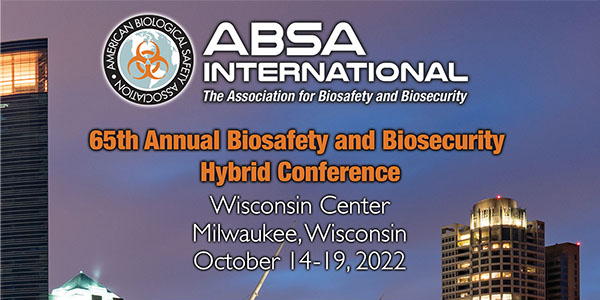
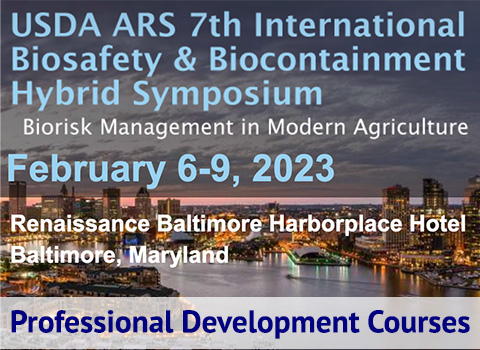
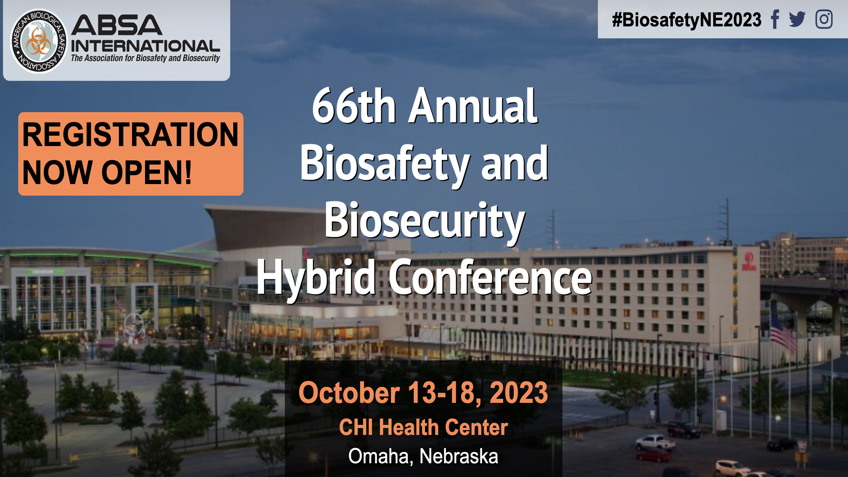
  • 65th Annual Biosafety and Biosecurity Hybrid Conference

    Wisconin Center 400 W Wisconsin Ave, Milwaukee, WI, United States

    Three full days of intensive professional development courses to educate and inspire. Three full days of state-of-the-art keynotes, papers, and panels highlighting best practices and hands-on skills crucial for today’s biosafety and biosecurity professionals. Exhibits showcasing the latest in laboratory biosafety and biosecurity products and services Invaluable networking opportunities to share and learn from other biosafety and biosecurity professionals

  • 02. Updating Your Preparedness Toolbox for Future Outbreaks or Pandemics

    Webinar

    What’s coming next in the world? Do you have the tools you need to be prepared for the next outbreak or pandemic? Updating Your Preparedness Toolbox for Future Outbreaks or Pandemics is a roundtable discussion that will feature several biosafety and public health professionals. The panelists, who work across government, academia, industry, and public health, will discuss aspects of their institution’s response to emerging and reemerging pathogens and infectious disease emergencies. Lessons learned from previous emergencies will be shared. Topics will include risk assessment, communication challenges and solutions, program and policy changes, and occupational health.

  • ARS1V. Plant Pathology and Containment

    Zoom , United States

    The course will provide a background overview and illustration of how containment facilities for plant research can be designed, constructed, and operated to meet various standards and guidelines. The standards will be based on those given by US agencies though international entities will also be referenced. Principles of plant diseases and the organisms that cause them will be discussed as well as an emphasis on the pathways that pathogens may disseminate to new areas and using diagnosis for early and accurate detection. Case studies will be used to give an overview of systems that protect cropping systems from plant diseases. [...]

  • 01. Arthropod Research, Containment, Biosafety and Beyond

    Webinar

    Virus-based Gene Transfer Vectors is an intermediate course that will examine the molecules, processes, and techniques involved in recombinant gene expression. Participants will explore the technology of how viruses are converted into vector systems for the transfer of gene expression constructs. Common viral vector systems, including retroviruses, lentiviruses, adenoviruses, poxviruses, herpesviruses, alphaviruses, and baculoviruses will be discussed with an emphasis on the biosafety characteristics of the vectors derived from these viruses. This course is targeted for the biosafety professional who is not actively conducting laboratory research yet requires a basic understanding of recombinant DNA methodology.

  • 4V. BSL-3 Design and Operations: Lessons from the Trenches

    Zoom , United States

    Friday, February 17, 2023, from 10:00 AM - 3:00 PM CDT 4V. BSL-3 Design and Operations: Lessons from the Trenches Matt Anderson, PhD, RBP(ABSA), CBSP(ABSA), University of Nebraska—Lincoln, Lincoln, NB Many academic institutions have built Biosafety Level 3 containment laboratories over the past 15 years, anticipating these facilities to be an instrument to attract researchers and stay on the cutting edge of science. Most of these labs have been successfully operated since construction while others have become dormant due to various factors ranging from poor initial design, construction issues, engineering flaws, lack of operational staff, lack of funding for the [...]

  • ARS2V. Agricultural Risk Assessment

    Zoom , United States

    This course will cover critical differences between the “normal” laboratory risk assessment process (as outlined in the Biosafety in Microbiological and Biomedical Laboratories (BMBL)) and the more holistic agricultural risk assessment process that is required to focus on both worker health and safety as well as release to the environment. Biocontainment is a part of all risk assessment processes and it becomes critically important to delineate it as a separate goal of risk mitigation strategies when working with agriculturally important agents, as they are not often highly hazardous to humans. Therefore, these agents are seen as “safe” when, in reality, [...]

  • 09. Occupational Health: An Overview

    Webinar

    Occupational health is a multi-disciplinary approach to programs and services aimed at protecting and preserving the health of the workforce within the various research and laboratory environments. This live webinar will serve as an overview of research and laboratory occupational health and will include a wide range of topics to consider in an effective occupational health program. Attendees will have the opportunity to obtain key knowledge of the components necessary for an effective occupational health program, applicable to their own program or for the establishment of such a program. Emphasis will be on developing or improving your program within regulatory requirements and application of best evidence-based practices, as well as the availability of internal and community resources. The sessions will highlight health and safety hazards (biological, chemical, physical, psychological) in research and laboratory settings (clinical, bench laboratory, animal work, field work); stress the use of risk assessment to determine priorities and to clarify decision-making; and identify approaches to the services necessary to provide illness and injury prevention across the continuum of work (pre-work baseline, periodic, post exposure, and exit from the workplace).

  • 07. Train-the-Trainer: Beyond the Basics

    Webinar

    Train-the-Trainer: Beyond the Basics is a webinar designed to take your instructor-led training to the next level. Using hands-on, practical applications you will learn to address the unique needs of adult learners (including accessibility needs), effectively plan your next training, and utilize tips and tricks to improve your facilitation. This webinar will show you how to use a simple planning tool as a guide to make the most of your development time and more easily help you design an effective PowerPoint presentation. Looking to use tools to enhance your training? Join us as we incorporate a variety of interactive tools such as whiteboards and polls to gain real-time feedback. This webinar will show you how to effectively use questions to engage your in-person and virtual audiences, and help you establish rapport and trust with your participants. The webinar will be led by a training manager with 25 years’ experience designing and developing educational experiences for private and public clients.

  • 10. Q&A Infectious Substance Shipping

    Webinar

    Q&A Infectious Substance Shipping webinar provides an opportunity for participants to learn about recent changes to international regulations and interact with a panel of shipping experts. Regulatory experts from organizations to be determined and have been invited along with a packaging expert from Saf-T-Pak/Labelmaster to discuss hazardous material shipping. Participants will be afforded an opportunity to submit questions for the panel to review in advance. As many questions as possible will be discussed during the webinar. Questions not addressed will be collated, answered by the experts, and provided to all participants along with a transcript of the session.

  • 03. Fundamentals of Microbiology and Infectious Disease

    Webinar

    Fundamentals of Microbiology and Infectious Disease is intended for those professionals that participate in protocol review, facilities planning, and any other risk assessment activities, but are unsure as to the actual nature of the disease risks of microbiological agents. Biological safety and risk assessment will not be covered in this course. The proposed topics will cover infectious agents, virulence factors, pathogenicities, host-microbe interactions, susceptibility, modes of transmission, and the changes seen in the microbial world. If you don’t know the difference between a TCID50, PFU, or ID50; or why HBV is stable in dried blood and HIV is not; or why influenza is an inhalation hazard; or why public health officials advocate flu shots each year—then this course is for you.

  • Preventing and Treating Biological Exposures: An Occupational Health Colloquium

    Embassy Suites–Alexandria Old Town 1900 Diagonal Rd, Alexandria, VA, United States

    Preventing and Treating Biological Exposures: An Occupational Health Colloquium (June 11-14, 2023) ABSA International is a co-sponsor of the 13th annual “Occupational Health Colloquium: Preventing and Treating Biological Exposures”. The Colloquium is being held June 11-14, 2023 at the Embassy Suites in Alexandria, VA. It begins with a special event, a unique day-long “Behind the Scenes” tour of the National Zoo (60 people maximum). Preconference classes will be on Monday, and the colloquium itself on Tuesday and Wednesday. Topics include risks associated with monkeypox, avian influenza, cutting-edge molecular tools, sharps, new vaccines, Herpes-B , and lab animal allergies. A workshop on this subject [...]

  • 04. Concepts of Virology

    Webinar

    Concepts of Virology will briefly review gene expression in eukaryotes and examine several concepts of virology. Characteristics of different viral families will be presented as well as general replication strategies employed by different viruses. Mechanisms of viral pathogenesis and strategies for antiviral intervention will also be explored. Participants should have a familiarity with molecular biology. The course is targeted to the biosafety professional who does not actively conduct laboratory research but would like to gain a basic knowledge of virology.