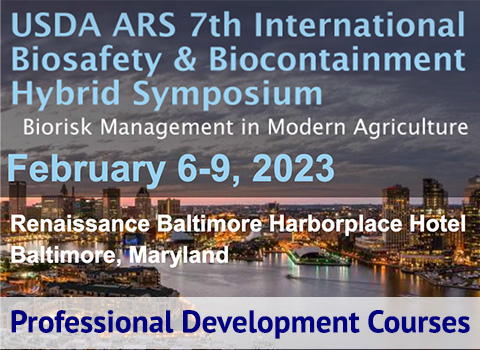
This course will cover critical differences between the “normal” laboratory risk assessment process (as outlined in the Biosafety in Microbiological and Biomedical Laboratories (BMBL)) and the more holistic agricultural risk assessment process that is required to focus on both worker health and safety as well as release to the environment. Biocontainment is a part of all risk assessment processes and it becomes critically important to delineate it as a separate goal of risk mitigation strategies when working with agriculturally important agents, as they are not often highly hazardous to humans. Therefore, these agents are seen as “safe” when, in reality, they present a real threat to the animals and environment surrounding the laboratory. Additionally, the risk of these “safe” agents will be discussed in the context of the emerging/re-emerging agents that are just as likely to be present in veterinary clinical laboratory or necropsy spaces as in human healthcare settings. The focus of the course will be on the critical aspects of agricultural risk assessment that differ from other described processes: the potential economic impact on local or regional animal and plant morbidity and mortality; and the international trade implications of disease presence in the country.
Events posted are for the biosafety community and are not automatically approved for CM Points.
Approved trainings can be found here.
Approved trainings can be found here.
Have an event? List it in the Biosafety Calendar.
Events submitted must be approved and may take up to 3 business days to appear on the website.
If you login first you will be able to modify your calendar events if you need to.

This event has passed.