
How to Mitigate and Respond to Threats in the Laboratory
Joint ABSA and APHL FREE Webinar
Have an event? List it in the Biosafety Calendar.
Events submitted must be approved and may take up to 3 business days to appear on the website.
If you login first you will be able to modify your calendar events if you need to.
Joint ABSA and APHL FREE Webinar
Virus-based Gene Transfer Vectors is an intermediate course that will examine the molecules, processes, and techniques involved in recombinant gene expression. Participants will explore the technology of how viruses are converted into vector systems for the transfer of gene expression constructs. Common viral vector systems, including retroviruses, lentiviruses, adenoviruses, poxviruses, herpesviruses, alphaviruses, and baculoviruses will be discussed with an emphasis on the biosafety characteristics of the vectors derived from these viruses. This course is targeted for the biosafety professional who is not actively conducting laboratory research yet requires a basic understanding of recombinant DNA methodology.
This course is tailored for individuals responsible for establishing and overseeing infectious substance shipping programs within their facilities. This webinar series aims to assist institutions in developing robust shipping programs tailored to their needs. Course elements include: training; written policies; written descriptions of program plans; transport and shipping specific SOPs; safety and security plans; emergency response plans; logistics and supplies; carrier selection and support; MOUs and authorizations; access control and personnel assurance. The instructor will provide a detailed and comprehensive shipping program assessment and implementation guidance document. Attendees will receive an introduction to this document and step-by-step guidance on its completion. By completing the assessment document, attendees will conduct a thorough review to identify areas for improving existing shipping programs. This interactive, instructor led, web-based training will invite attendees to share examples of how these elements are addressed at their own institution.
Part I Foundations and Frameworks – Plant and plant pest research is the backbone of both genetically modified, disease resistance and breeding of both academic and biotechnology research so it is important that research is conducted legally and ethically. The first webinar will cover the importance of having the Material Transfer Agreement (MTA) in place before research begins and a Non-disclosure Agreement (NDA) to protect confidential business information (CBI) and Intellectual Property (IP) rights. We will discuss the Cartagena Protocol on Biosafety, which is an international agreement on biosafety and a supplement to the Convention on Biological Diversity to understand requirements for access and benefit sharing between countries. The class will walk you through setting up an eFile account which is used for applying for permits. This will be the first session of 2 and it will be conducted over a 2-hour period with time for questions and answers. Part II: Federal Compliance – PPQ, BRS, VS, PHYTO, EPA, Biopesticides, Wildlife & Fisheries – The second part of the series will provide participants with an overview of the federal regulations that allow you to import, export and move biological material inside and outside the U.S. legally. The class will expand on the first session by walking you through the ins and outs of applying for different permits. This course will cover the foundations of whether a permit is needed, how to apply for a permit, what type of permit you need, permit conditions, and the result of non-compliance.
MABSA is pleased to announce our quarterly hybrid meeting. November 13, 2025 Time: 5 pm - 7:30 pm Location: University of Pennsylvania, Facilities & Real Estate Services (FRES) - Conference Room #01 3401 Walnut Street (3160 Chestnut Street GPS address), Philadelphia, PA 19104 Meeting agenda, parking and direction to meeting room via this link. Zoom link will be provided for virtual registrants. Meeting Registration Member: in person - $25 / virtual - free Non-member: in person - $45 / virtual - $20 Note: Nonmember registration includes one year of membership for 2026. Please register and add in the date of meeting via this link. Members (virtual [...]
Strategic Biocontainment Laboratory Planning and Operations Workshop The ABCs of High Containment Operations November 17-21, 2025 Toronto, Ontario, Canada https://cabs-acsb.ca/highcontainPlan.aspx CABS-ACSB and Merrick & Company are pleased to co-present the Strategic Biocontainment Laboratory Planning and Operations Workshop. This comprehensive, hands-on workshop is designed for professionals involved in the planning, renovation, operation, and management of high-containment laboratories and research facilities. Participants will gain an in-depth understanding of the critical elements required to establish and sustain a secure, efficient, and compliant biocontainment facility. Through interactive discussions, case studies, real-world scenarios, and practical exercises, this course will cover: Biocontainment Fundamentals– A historical perspective, [...]
Intro to Flow Cytometry Biosafety will provide safety professionals and anyone working in a laboratory setting a foundation on flow cytometry and cell sorting and strategies for mitigating the risks associated with typical flow cytometry instrumentation and procedures. This course will include a detailed overview of how flow cytometers work, common sample types that are handled in flow cytometry laboratories, a typical flow cytometry workflow, and considerations for core facilities/shared resource laboratories. The risks associated with flow cytometry and cell sorting will be discussed as well as mitigation strategies that can be implemented to reduce these risks. The course will be presented by experts from the International Society for Advancement of Cytometry (ISAC) Biosafety Committee and will include an overview of the ISAC Biosafety Standards. This course will include lecture material, breakout sessions where attendees will evaluate risks and develop plans for risk mitigation using real-world examples, and ample time for questions.
Re-Emergence of Pertussis in the US: Risks and Prevention Tuesday, January 27 | 3 – 4 p.m. CT In this upcoming Grand Rounds, Flor Muñoz, MD, MSc, will discuss the re-emergence of pertussis (whooping cough), a highly contagious respiratory disease caused by Bordetella pertussis. Despite the availability of safe and effective vaccines, declining vaccination coverage has contributed to a resurgence of pertussis. Muñoz will highlight current epidemiologic trends, mechanisms of transmission, and prevention strategies, with particular attention to the risks faced by infants, pregnant women, and older adults. Muñoz is an associate professor of pediatrics, infectious diseases, molecular virology and [...]
From Expertise to Influence is a practical course designed for biosafety professionals seeking to amplify their voice in an increasingly digital landscape. In this course, attendees will discover how artificial intelligence (AI) tools can help create compelling content, streamline personal communications, and establish oneself as a thought leader in biosafety. Examples will be shared of how to better communicate at work and beyond while avoiding common AI pitfalls like generic messaging, factual errors, and loss of your authentic voice. Presenters will explore the latest LinkedIn features and algorithm changes that impact how biosafety professionals can reach colleagues, organizations, and industry partners. Finally, strategies will be shared for optimizing your profile and content for maximum engagement and visibility. At the end of this course, attendees will be able to apply these insights—understanding public relations role in personal branding and the items needed for their personal checklist, to elevate their digital professional presence. This course will be led by communications experts with over 25 years’ experience developing and sharing messages with a wide variety of target audiences in brand-building and crisis situations.
Join BSI Consulting’s “Better Together: A Pharma & Biotech EHS Forum” at Boston’s Museum of Science on February 25, 2026! This one-day forum brings together EHS leaders and professionals across the pharmaceutical and biotech fields for a focused exchange on shared EHS challenges. Attendees will learn about the operational impact of misclassified waste, identify gaps in biosafety implementation, explore practical applications of AI, and address workforce competency challenges. Reserve your spot today!
BioNet will be hosting a Lunch Meeting this Friday, March 6th, 2026 from 11am to 1pm. The agenda for the meeting is focused on the topics in the following order: The Canadian Biosafety and Biosecurity Landscape Since Federal Legislation and Regulations, UK and EU Biosafety Regulatory Overview, ABSA 2026 initiatives, and NIH modernization survey results and BioNET statement (if time permits). Registration
The clinical setting poses a different environment than research laboratories. This course provides foundations for applying biosafety concepts in the clinical setting. Course topics include common issues and lessons learned pertaining to clinical facilities including pharmacies, laboratories, clinics, infusion areas, ORs, and waste disposal facilities; PPE, disinfection, risk assessments, and safety practices in the clinical setting; speaking biosafety to doctors, nursing staff, pharmacy staff, infection prevention and control, diagnostic microbiology lab personnel, and hospital EHS staff; applying NIH Guidelines and the BMBL to the clinical setting; gaps in oversight of research safety for clinical trials, and risk assessments for unconventional or highly specialized delivery mechanisms for biologics. The course will conclude with a focus on clinical trials including the role of an IRB and how it can overlap with an IBC; the process for investigational products to obtain FDA approval to be deemed as safe and effective therapeutics; and the evolving regulatory environment in the U.S. for biologics such as vaccines, regenerative medicines, and gene therapy. The course is designed to be highly interactive with discussions, surveys, and group exercises.
Join the Eagleson Institute and the American Association for Laboratory Animal Science (AALAS) for a new, in-depth workshop focused on advancing containment practices in animal research. This one-and-a-half-day event brings together Laboratory Animal Veterinarians, Biosafety Professionals, Occupational Health Professionals, Facility Managers/Engineers, and Animal Care Staff for advanced discussions and hands-on learning. Participants will explore how containment principles connect across key focus areas and apply those concepts through interactive case studies. Topics include: Facility Operations Occupational Health Animal Welfare Training
Quarterly PHABSA Meet-Up for PHABSA members to bring either biosafety related question and concerns, get answers from peers, and network to have resources and connections to support day-to-day biosafety at their job.
Principles & Practices of Biosafety® will introduce the essential elements of biosafety and provide extensive resource lists for use after the course. Interactive exercises will be used throughout to provide hands-on experience and to encourage networking and problem-solving among participants and instructors. Objectives At the end of the course each participant will be able to: Describe potentially hazardous biological materials, the risks associated with their use, and the means to minimize risk and to protect against or prevent release or exposure Discuss ways to provide effective technical expertise in situations involving potentially hazardous biological materials Identify, locate, and efficiently use [...]
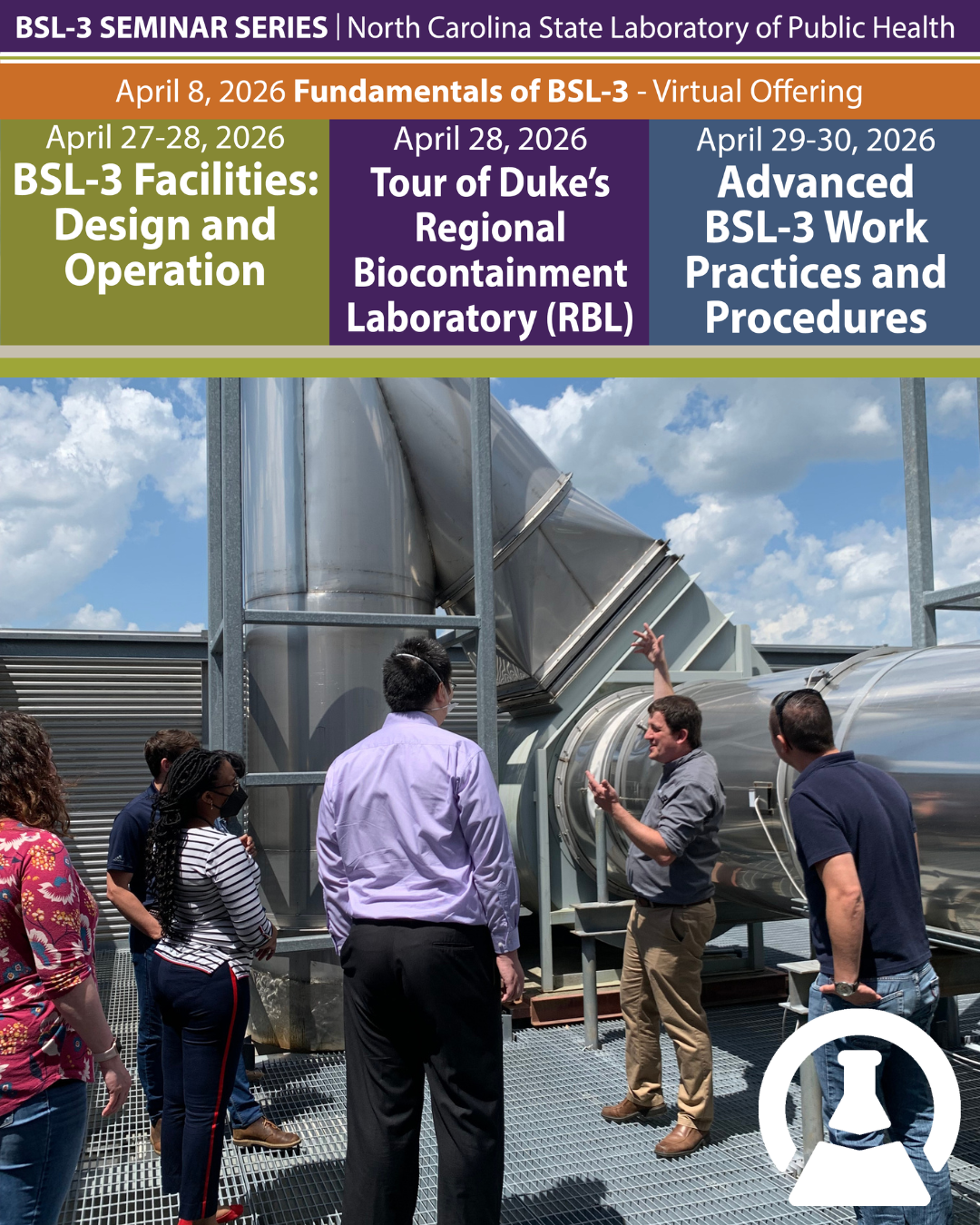
BSL-3 laboratory training is a four-day intensive training for laboratory staff, managers, biosafety professionals, and individuals with direct or indirect involvement with work in high-containment. These courses are designed to prepare individuals for the basics of safely working in and around BSL-3 laboratories and includes a mixture of practical and classroom courses covering: Review of biosafety principles and levels Risk assessment and management Waste management Laboratory management Safety procedures Emergency management Biosafety cabinet practices and procedures Small and large spill decontamination Donning and doffing PPE Laboratory operations and preventative maintenance Data and material management Inventory and records management Biosecurity [...]
International Workshop on One Health Research: Improving Food Security and Resilience April 15– 17, 2026 Tremont House 2300 Ship Mechanic Row St, Galveston, TX 77550 Complex public health problems such as emerging infectious diseases, occupational health risks faced by agriculture workers, and ongoing concerns with food safety require multidisciplinary and inter-institutional approaches to protect the security, resiliency, and sustainability of the global food supply. Our International Symposium and Workshop Planning Committee of diverse experts is designing an exciting program to engage leaders in agricultural industries, public health, veterinary health, food safety, and environmental health institutions. The Symposium and Workshop [...]
Fundamentals of Microbiology and Infectious Disease is intended for those professionals who participate in protocol review, facilities planning, and any other risk assessment activities, but are unsure as to the actual nature of the disease risks of microbiological agents. Biological safety and risk assessment will not be covered in this course. The proposed topics will cover infectious agents, virulence factors, pathogenicities, host-microbe interactions, susceptibility, modes of transmission, and the changes seen in the microbial world. If you don’t know the difference between a TCID50, PFU, or ID50; or why HBV is stable in dried blood and HIV is not; or why influenza is an inhalation hazard; or why public health officials advocate flu shots each year—then this course is for you.
Events will held LIVE, not recorded. In-Person or Virtual (Zoom) Monday, April 20, 2026: Pre-Symposium Workshop AM Workshop (8:00 AM- 12:00 PM): Applying ANSI/ASSP Z16.1-2022 Safety and Health Metrics to Biosafety Program Operations and Management Turning Performance Measures into Actionable Biosafety Insights Speakers: Dr. Robert Emery and Dr. Scott Patlovich, The University of Texas Health Science Center at Houston (UTHealth Houston) Includes Breakfast PM Workshop (1:00 PM – 5:00 PM): Emerging Pathogens and Biosafety Preparedness Speakers: Dr. Courtney Woolsey, The University of Texas Medical Branch at Galveston; Dr. Phillip Kaufman, Texas A&M University; Dr. Gregory Gray, The University of [...]
Agricultural biosecurity is a critical component of the One Health concept. It includes various strategies designed to safeguard the health and welfare of agriculturally important animals, the environment, and society in general by preventing infections and their spread among these species, humans, and nontarget species, including wildlife. Increased movement of live animals and their products, as well as the growing trend towards intensification and expansion of animal production systems, represents a significant risk to food supply chains, public health, and the economy due to the possible emergence and spread of exotic animal pests and pathogens, zoonotic diseases, and foodborne agents. Effective management and control of these challenging and complex risks requires application of core principles and cohesive strategies that emphasize sustainability through improved husbandry and health management practices.
This event is hosted by the Texas Department of State Health Services Public Health Region 1 Clinicians, veterinarians, laboratorians, researchers, public health professionals, and the community come together to explore the interconnected challenges of tuberculosis across human, animal, and environmental health. Through expert panels and cross-disciplinary discussions, participants will gain insights into current TB risks, surveillance, diagnostics, and prevention strategies in Texas.
REGISTERhttps://form.jotform.com/260974992411162This meeting will be in a virtual formatONLINE BUSINESS AND TECHNICAL MEETING Friday, April 24, 2026 11:30 – 3:30 pm MST Current FRaBSA Members – Free Non-Members - $15 North American ABSA Affiliate Members - $10.00 Non-USA Attendees – Free Order of presentations may change - note the schedule has changed 11:30-12:00 pm Gathering/Welcome/Introductions- FRaBSA President Business Meeting- FRaBSA President 12:00-12:30 pm Sponsor Presentation: Merrick [...]
This advanced-level class utilizes scenarios and hands-on workshops to reinforce concepts contained in the senior level of CDC’s “Biosafety Laboratory Competency Guidelines.”
BioNet will be hosting our BioNet Symposium in hybrid fashion on Friday, May 1st from 9am to 2pm. Current speaker topics include MACSQuant Tyto, a non-aerosol cell sorting process, Plumes Modeling and the Tijuana River Sewage Crisis, and Lessons Learned: Non- Human Primate Exposures. More speaker topics to be added in the coming weeks. For those attending in-person, we ask that you please complete registration at your earliest convenience so that we have an accurate headcount of attendees for food. Cost for members is $40 for members attending in-person and $55 for non-members. Non-members attending virtually pay $40 and members pay $25. For those interested, the event will follow with a happy hour, social event at a nearby BJ's. We hope to see you there!
8am-10am, Monday, May 4, 2026 FBI Academic Biosecurity Workshop Speakers: Local and Federal WMD Agents 8am-10am, Monday, May 4, 2026 (concurrent) Integrating AI into Biotechnology: A Biosecurity Risk Assessment Workshop: Embodied AI and Automation in Biorisk Management Speaker: Leyma P. De Haro, PhD, RBP (ABSA) 1 - 5pm, Monday, May 4, 2026 Dual-Use and DNA Synthesis Screening Workshop Speakers: Piers Millet, PhD, David Gillum, PhD
The symposium on May 5, 2026 will offer talks once again on prominent issues facing Biological Safety and EHS professionals. Presentations will cover AI, risks of Mirror Life cells, dangerous gain of function (GOF) pathogens and pending or updated regulations, and guidance for management of everyday bio-risk outside of existing regulatory boundaries. Another interactive session will present, review, and discuss mock high-risk protocols in the format of an Institutional Review Entity (IRE) meeting to help attendees address updated or new DURC and PEPP rules.
ABSA International’s4th Biosecurity Virtual SymposiumMay 12-13, 2026The Symposium will bring together biosecurity professionals from a wide range of disciplines with varying expertise to share their experiences and knowledge on diverse biosecurity topics. The Symposium will offer attendees an opportunity to learn the latest in biosecurity and have thought-provoking conversations about real-world biosecurity issues, concerns, and scenarios.
Kara Brunelle, Ph.D. is the Science Director of The Baker Company and an instructor at the Eagleson Institute. She earned her Ph.D. at the University of Vermont Cell and Molecular Biology Program, completed her postdoctoral training at Yale University, and was a Lab Manager, Safety Officer, and Researcher at the Harvard Stem Cell Institute. Her hands-on academic research and biosafety experience give an important viewpoint as a part of the New Product Development team and end user education and training. The link to join this meeting is: Microsoft Teams meeting Join: https://teams.microsoft.com/meet/25169428336793?p=2XqPJEckslQTLZ4Q1d Meeting ID: 251 694 283 367 93 Passcode: [...]
Concepts of Virology will briefly review gene expression in eukaryotes and examine several concepts of virology. Characteristics of different viral families will be presented as well as general replication strategies employed by different viruses. Mechanisms of viral pathogenesis and strategies for antiviral intervention will also be explored. Participants should have a familiarity with molecular biology. The course is targeted to the biosafety professional who does not actively conduct laboratory research but would like to gain a basic knowledge of virology.
The Chesapeake Area Biological Safety Association presents their May Technical Seminar: "So Your Training Plan Failed. Now What?" Presented by Bahiya E. Stone and Carmen Perez-Fisher, University of PennsylvaniaLocation: Virtual onlyTime: 5:30-6:30 PM EasternThis is a free event! Register
This webinar will first summarize the content of the ANSI/ASSP Z16.2-2022 Safety and Health Metrics and Performance Measures report and then provide tangible examples of how actual biosafety program data can be collected, displayed, communicated, and used as the basis for programmatic decision-making while meeting the criteria described in the report. The webinar will include group discussions focused on discovering what data is currently being collected and what data is expected by organizational leadership, so participants are asked to come prepared to describe their respective measures and metrics that are currently being used and which parameters other stakeholders are seeking. The importance of capturing and communicating this information to “sell” your biosafety program to organizational stakeholders will be featured. The ability to effectively “sell” your program can help garner necessary program support and resources for success. Ample time will be allotted for participants’ questions and discussion.
Weaving the Future of Biosafety: Networks, Heritage, and Innovation.02 June 2026, EBSA Conference 2026 and Preconference courses, Bruges and Brugge, 2 days of EBSA pre conference courses on Tuesday 2 and Wednesday 3 June 2026, 2 days of EBSA conference on Thursday 4 and Friday 5 June 2026.
This dynamic, one-day forum brings together EHS experts in pharma and biotech for a focused exchange on shared challenges and strategies shaping the future of EHS.
Beat the Bite: Tick Safety for Research Teams provides research personnel with essential guidance and practical tips for safely handling ticks in a laboratory or animal research environment. Attendees will explore the tick life cycle, zoonotic pathogen transmission, key exposure risks during colony maintenance and experiments, and how to apply appropriate biosafety measures including PPE, containment, safe handling techniques, bite prevention, decontamination, tick escape responses, and post-exposure protocols.
BSL-3 laboratory training is a four-day intensive training for laboratory staff, managers, biosafety professionals, and individuals with direct or indirect involvement with work in high-containment. These courses are designed to prepare individuals for the basics of safely working in and around BSL-3 laboratories and includes a mixture of practical and classroom courses
Please join us for ChABSA's annual scientific symposium, featuring keynote speakers Kelly Schultz, CEO of the Maryland Tech Council, and Rebecca Bradford, SVP of ATCC Federal Solutions. The event will be held at the Universities at Shady Grove in Rockville, Maryland and broadcast virtually. For more details, please check out our website.
About BSL4ZNet The BSL4ZNet is a partnership of animal and public health organizations from Canada, the United States, Germany, the United Kingdom, and Australia. The network was established to strengthen coordinated responses to current and emerging high‑consequence zoonotic and infectious disease challenges, using a One Health approach supported by robust international collaboration. More information is available on our website: BSL4ZNet Website About the Conference Our bi‑annual international conference is a core event for the BSL4ZNet community. It provides a platform for scientists, program leaders, and high‑containment specialists to exchange new research, innovations, and lessons learned related to high‑containment laboratories [...]
Registration is NOW OPEN for the 38th Annual Hybrid Biosafety Symposium presented by the Mid-Atlantic Biological Safety Association Thursday, June 18, 2026 at The Mütter Museum Philadelphia, PA. Date: June 18, 2026 Time: 8 am - 5 pm Members: $50.00 in person/$25.00 virtual Non-Members: $70.00 in person/$45 virtual Students: $20.00 in person/$10.00 virtual Agenda: https://www.mabsa.org/files/documents/09a316cc-9b6f-40bf-bdf4-53485ca09d1b.pdf Registration: use the link. In-person registration ends on June 3, 2026. Virtual registration ends on June 15, 2026. No WALK INS. For more information, see https://www.mabsa.org/
Principles & Practices of Biosafety® will introduce the essential elements of biosafety and provide extensive resource lists for use after the course. Interactive exercises will be used throughout to provide hands-on experience and to encourage networking and problem-solving among participants and instructors. Objectives At the end of the course each participant will be able to: Describe potentially hazardous biological materials, the risks associated with their use, and the means to minimize risk and to protect against or prevent release or exposure Discuss ways to provide effective technical expertise in situations involving potentially hazardous biological materials Identify, locate, and efficiently use [...]
This introductory course is a four-day training designed to certify personnel for safe entry into an operational BSL-3 laboratory. This course consists of a mixture of classroom and practical training that includes an introduction to microbiology, biosafety, risk assessment concept, BSL-3 lab characteristics, emergency management and personal protective equipment (PPE) use including procedures for donning and doffing PPE with N95 or various PAPR respirators.
The Quarterly Biosafety Meet-up for June will be June 26 at noon in Temple's iNEST. The meet up is for Biosafety Professionals in the Philadelphia area to network over lunch and have a space to ask work related question directly of each other instead of on the big ABSA listserv. Feel free to add anyone local to the Philadelphia Area to the TEAMS group you think would benefit from this group. If anyone has a specific topic to discuss, please bring them to the meet-up. The agenda will be finalized later.
Large-scale Biosafety will review biosafety for work at large-scale, which the NIH rDNA Guidelines defines as >10L. The course will review Appendix K from GLSP to BSL-3 LS, with a focus on primary and secondary containment. It will review basic bioprocessing steps, such as fermentation/cell culture and purification technologies. Examples of classic and newer single use technologies will be provided. Pearls and pitfalls of the various technologies will be discussed, using various scenarios. The course will include a review of risk assessment techniques used for large scale bioprocesses and a discussion of large-scale related to vaccines, viral vectors, and recombinant proteins.
Did you know that temporary workers can be found in many academic, healthcare, and industry workplaces that have laboratories? Do you have temporary workers from a staffing agency working in your institution's laboratories alongside employees? Do you know what the legal definition of a temporary worker is, and how this impacts health and safety in your workplace when a temporary worker works in your institution's laboratories? Have you ever wondered who is responsible for the health and safety of a temporary worker who works in your laboratories? These are just some of the questions that will be reviewed and answered during this one-hour webinar. This webinar is for anyone who is involved in EHS/Biosafety Programs at institutions that hire temporary workers who work alongside employees in the laboratory setting. This webinar will be led by representatives from the US Department of Labor - Occupational Safety and Health Administration (OSHA) Temporary Worker Initiative. They will provide an overview of the temporary worker health and safety requirements as well as share best practices and resources that are available to assist you. There will be time for questions at the end of the presentation.

Molecular Biology 101 is intended for those professionals that participate in protocol review, facilities planning, and other risk assessment activities but lack a basic understanding of molecular biology and techniques. Following this course, attendees will be able to do more than regurgitate facts and use the new understanding of the principles of molecular biology in various situations at their institution. This course will cover topics such as the chemistry of nucleic acids, DNA replication, RNA transcription, and protein translation, the Central Dogma of Biology, DNA cloning, transfection of prokaryotic and eukaryotic cells, restriction enzymes, and recombinant DNA lab methodologies (including PCR), DNA fingerprinting, sequencing, and detection protocols). While this course will not turn you into a molecular biologist, it will give you enough background information to understand the nature and manipulation of genetic material and hopefully unveil the mystery of deoxyribonucleic acid.
Aug. 3-5: The MABioN Annual Symposium is a two-day conference for biosafety professionals and others involved in biosafety. Speakers and attendees have the option to participate in person or virtually. This year the symposium is co-hosted by Northwestern University and the University of Chicago. An optional half-day pre-symposium workshop on Protein Safety will be held on Monday morning. Register separately for the Monday morning workshop, which includes a break and lunch.
BSL-3 laboratory training is a four-day intensive training for laboratory staff, managers, biosafety professionals, and individuals with direct or indirect involvement with work in high-containment. These courses are designed to prepare individuals for the basics of safely working in and around BSL-3 laboratories and includes a mixture of practical and classroom courses covering: Review of biosafety principles and levels Risk assessment and management Waste management Laboratory management Safety procedures Emergency management Biosafety cabinet practices and procedures Small and large spill decontamination Donning and doffing PPE Laboratory operations and preventative maintenance Data and material management Inventory and records management Biosecurity
This workshop is designed for professionals involved in the importation of biological materials, including government, academic, and industry stakeholders. The session will provide a foundation in regulatory requirements—grounded in U.S. Customs and Border Protection (CBP) authority—along with key compliance processes and best practices for importing biological materials. Participants will learn how to strengthen partnerships, clarify import processes, enhance biosecurity awareness, and reduce compliance issues. Real-world case studies, practical tips, and interactive discussions will be included to help participants apply lessons in practice.
Join the NSF SECURE Center for a SPARK webinar featuring experts from U.S. Customs and Border Protection (CBP) and the Federal Bureau of Investigation (FBI) on the importation of biological research materials into the United States.
Artificial intelligence (AI) chatbots are emerging as practical tools to support biosafety and biosecurity programs in communication, hazard analysis, and risk assessment. This interactive two-hour webinar introduces biosafety professionals to responsible and effective use of text-based AI tools to enhance safety documentation and experimental risk evaluations. Participants will learn how to apply AI to break laboratory workflows into task-level hazards, exposure pathways, and control measures aligned with regulatory frameworks and the hierarchy of controls. The session will demonstrate how chatbots can streamline SOP development, risk narratives, incident summaries, and plain-language training materials while maintaining compliance. Emphasis is placed on prompt design strategies for producing structured, reliable outputs. Hands-on exercises guide participants in refining prompts, validating AI-generated content, and addressing biosecurity and data governance considerations. Attendees will leave with practical workflows and reusable prompt templates to integrate AI into biosafety and security operations.
Often seen as common place today are teams of engineers, chemists, biologists and bioinformaticians working together in the same space, using shared equipment or shared areas. Biosafety in the Open Lab is a dynamic, collaborative webinar designed for biosafety and general safety professionals, lab managers, and researchers navigating the complexities of shared, multi-user environments. Moving beyond the traditional lecture format, this session serves as a conversational forum for peer-to-peer exchange and real-time problem-solving. Rooted in proven safe work practices, our four panelists will draw on diverse institutional backgrounds and experience to facilitate a candid discussion on managing mixed-hazard spaces and overcoming the "Tragedy of the Commons." Together, we will explore hazard mitigation with a focus on administrative controls that foster shared accountability and shift laboratory mindsets toward collective responsibility. Attendees will walk away not only with a suite of practical tools and templates but with the collective wisdom of a community dedicated to shoring up institutional safety through inspiration, commiseration, and action.