Resources with keywords: Drug-Resistant Candida auris
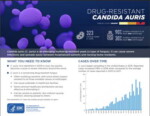
C. auris is the first fungal pathogen designated an urgent antimicrobial resistance threat. 6,304 U.S. clinical cases in 2024; estimated ~7,000 in 2025. C. auris persists on surfaces and medical equipment for weeks; HCWs involved in wound care, catheter insertion, and line management are at highest risk of pathogen carriage and inadvertent transmission. Clinical mycology laboratory personnel should use BSL-2 precautions. Environmental sampling of patient rooms is recommended. Echinocandin-resistant strains increasing; consult infectious disease specialist for treatment.
Kurutz A, Innes GK, Sherman A, et al.
Candida auris, a frequently multidrug-resistant fungal pathogen, can spread within health care facilities. Dialysis facilities face particular infection prevention and control (IPC) challenges because their patients require complex medical care and frequent invasive procedures.
Santana DJ, et al.
C. auris has a specific and dominant adhesin called Surface Colonization Factor (SCF1), which adheres by cation-dependent interactions to a wide range of biotic and abiotic surfaces.