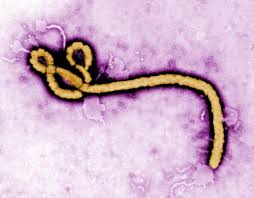
" data-image-caption="
You can stop him…
" data-large-file="https://absa.org/wp-content/uploads/2026/07/Cyber-bioterrorism-800x457.jpg" class="size-medium wp-image-344614" src="https://absa.org/wp-content/uploads/2026/07/Cyber-bioterrorism-350x200.jpg" alt="Cyber-bioterrorism.. You can stop him..." width="350" height="200" /> You can stop him…
Every day, as we scroll through social media or browse the web, we are bombarded with a mix of facts, half-truths, and outright falsehoods. Much of this content is dressed up to look credible but designed to mislead and difficult to discern. Sometimes the deception is intentional: fabricated claims are pushed online to manipulate opinion, provoke fear, or undermine trust. Other times, people pass along bad information because they genuinely believe it is true. That is the difference between disinformation and misinformation, but both are factually incorrect.
In the healthcare space, the consequences of misinformation or disinformation can be serious. False claims about disease outbreaks, vaccines, or pharmaceutical products can lead people to delay care and distrust public health institutions. We have seen how this can contribute to vaccine hesitancy and the return of preventable diseases. When lies about human physiology are spread digitally at speed and scale, the result is something more dangerous than ordinary rumor. It becomes a form of cyber bioterrorism: the deliberate use of online platforms to spread fear, confusion, and harmful falsehoods about biological threats and health interventions.
This kind of manipulation does not always target computer systems in the traditional sense. Instead, it targets people: their judgment and emotions. It exploits the way we process information in social networks, where repetition can feel like proof and emotionally charged content spreads faster than careful analysis. The damage may not always be explosive or immediate, but it is real. It can erode confidence in science, deepen stigma, and interfere with life-saving decisions.
So, what can ordinary citizens do? While no one can stop every bad actor online, we can become harder to deceive. Here are three practical ways to detect and snuff out harmful misinformation before it spreads.
1 Check multiple reliable sources
If a claim seems shocking, emotional, or to perfectly confirm or shake your beliefs, that is the moment to slow down and verify it. Do not rely on a single post, screenshot, or anonymous video clip. Look for coverage from several independent and reputable sources. If a major health claim appears only on fringe websites, obscure accounts, or sensationalized social media posts, that should raise immediate concern.
A healthy information diet includes variety. Read across respected news outlets, public health agencies, scientific institutions, and expert commentary. When trustworthy sources agree on the core facts, you are more likely to be seeing reality rather than manufactured outrage.
2 Evaluate the source's credibility and intent
Not all content is created to inform; some posts are designed maliciously. Before accepting a claim, ask: Who created this? Have relevant expertise? Can this be traced back to an original source? Reliable information usually shows its work. It cites evidence and avoids exaggerated language. In contrast, dubious content often relies on emotional vague hooks, anonymous "experts," and unsubstantiated conclusions. In health communication, misleading claims can cause direct harm. It is worth remembering that disinformation does not always come from random internet trolls. At times, powerful organizations, including commercial actors, may present biased or incomplete information to influence public behavior. That is why source-checking is essential. Credibility should never be assumed because a post appears professional.
3 Pause and THINK before sharing
Falsehood spreads quickly as people react quickly. But one of the strongest defenses against misinformation is also the simplest – Pause and think! Before you share, use the THINK screening – Is it: T – true, H – helpful, I – inspiring, N – necessary, K – kind? Not every item needs to meet every standard, but this filter can stop a great deal of online harm. A moment of reflection— Of course, people who intentionally spread deception are unlikely to care about such a filter. But for everyone else, this habit can make a real difference.
Why does this matter now?
Online lies can magnify real-world harm. We saw it with COVID-19 and in some preventable diseases linked to declining vaccination rates. Misinformation does not just distort debate; it can shape behavior in ways that endanger lives. When you encounter false claims, the best response is usually calm and evidence based. Listen first. Then correct the error without mockery or alarmism. Separate fact from opinion. Point people toward trusted sources and fact-checking tools. Respectful explanation works better than telling someone is wrong. The fight against cyber bioterrorism belongs to all of us. Every time we verify before believing, we help weaken the spread of harmful deception. In a digital world where fear can go viral in minutes, critical thinking is an invaluable public health tool.
Further Reading:
POV: Health Misinformation Is Rampant on Social Media: Here's what it does, why it spreads, and what people can do about itg, Monica L. Wan, Boston University: BU Today, Feb. 9, 2024
Social media influencers increase the toxicity and power of misinformation, research shows, Lisa Lock, Cardiff University: News, March 12, 2026
Opinion: Swipe right on facts not myths: Social media's health misinformation craze, Emma Luu, Los Angelos Times: High School Insider, Jan. 29, 2026


You must be logged in to post a comment.