Resources with keywords: risk assessment
COVID-19 Safe handling and processing for samples in laboratory (NEW 6/2, Website, Regulatory)
Public Health England
This PHE guidance has been produced in collaboration with the Health and Safety Executive and will be updated when new information becomes available.
Waterborne Disease Risk Assessment Program2021 Annual Report
New York City Department of Health & Mental Hygiene Bureau of Communicable Disease & New York City Department of Environmental Protection Bureau of Water Supply
1 March 2022
keywords: risk assessment, Waterborne Diseases
Recent Bird Flu Infections in U.S. Wild Birds and Poultry Pose a Low Risk to the Public
CDC
14 February 2022
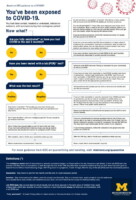 You’ve been exposed to COVID-19 - Now what? (NEW 10/15, Document, Infographic)
University of Michigan
You had close contact, masked or unmasked, indoors or outdoors, with someone during their contagious period*. Now what?
Based on CDC guidance as of 07/30/21
Biosafety advisory: SARS-CoV-2 (Severe acute respiratory syndrome-related coronavirus 2) (Website, Regulatory)
Health Canada